Reviewing the Abuja National Mosque Redwork Design
As a designer who has spent years digitizing and testing machine embroidery patterns, I approach every new embroidery file with a mix of curiosity and caution. We have all been there: you download a beautiful preview, load it onto your machine, and hope the final stitch-out matches the promise of the thumbnail. Recently, I evaluated the Abuja National Mosque Nigeria Redwork design to see how it holds up in real-world applications. This is not just about aesthetics; it is about functionality, cultural respect, and commercial viability for Etsy sellers and craft business owners.
The subject matter itself carries weight. The Abuja National Mosque, also known as the Nigerian National Mosque, is an architectural landmark of significant importance. Translating such a structure into a machine embroidery design requires a delicate balance between artistic interpretation and respectful representation. My goal was to determine if this specific redwork pattern serves as a viable asset for custom apparel, home decor, or personalized gifts without losing its integrity during the stitching process.
First Impressions and Visual Personality
When I first opened the file in my editing software, the immediate impression was one of clean, linear elegance. Redwork is a traditional style that relies heavily on outline stitches, typically using a single color thread against a neutral background. This simplicity is deceptive. Without the coverage of dense fill stitch areas or the texture of satin stitch borders, the quality of the digitizing becomes glaringly obvious. Every jump, every angle, and every curve must be precise.
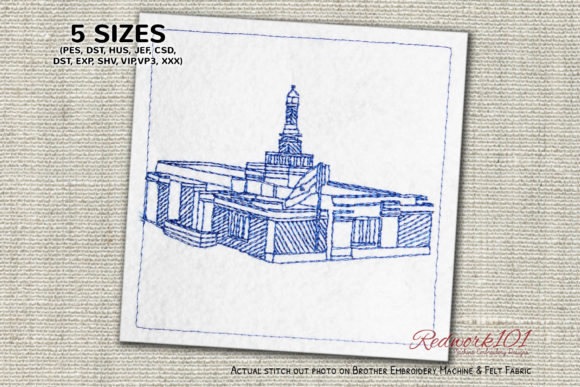
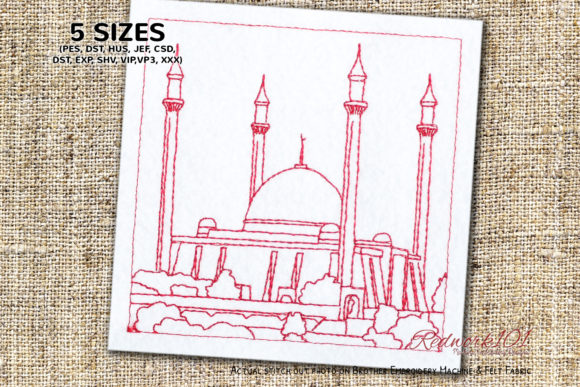
The Abuja National Mosque Nigeria Redwork captures the iconic silhouette of the mosque effectively. The domes and minarets are recognizable, which is crucial for a design rooted in Religion and cultural identity. The mood it creates is serene and dignified. It does not shout for attention; rather, it invites a closer look. For designers creating handmade product lines, this subtlety is a strength. It allows the design to fit into minimalist aesthetics, modern nursery decor, or sophisticated adult apparel without feeling cluttered or overly busy.
One notable feature mentioned in the product details is the optional Box Stitch. The description notes that the color of the outer box is different, suggesting a framing element. In my assessment, this box can serve as a useful boundary for placement, ensuring the design remains centered on items like tote bag design projects or pillow covers. However, I often find that removing optional frames allows for more versatile placement, especially on curved surfaces like caps or uneven textures.
Real-World Application and Fabric Performance
To truly test the design, I moved beyond the screen and considered practical scenarios. Imagine a customer ordering a personalized gift for a loved one traveling to Nigeria, or a member of the diaspora wanting to display pride in their heritage. A sweatshirt embroidery project using this design on a high-quality heather grey fleece would look striking. The red thread pops against the grey, offering a classic, collegiate feel that appeals to a broad audience.
I also visualized this on a natural linen tea towel or a cotton apron. Here, the redwork style shines. Linen’s natural slub and texture complement the organic feel of running stitches. However, this is where attention to stitch density becomes critical. If the digitizer has packed too many stitches into the intricate details of the mosque’s arches, the fabric may pucker. Conversely, if the density is too low, the design may look sparse and unfinished. Based on the visual profile of this file, it appears to use standard running stitch techniques, which generally lay flat and cause minimal distortion, making it suitable for lighter fabrics.
For baby embroidery projects, such as a bib or a onesie, the simplicity of redwork is advantageous. Babies have sensitive skin, and heavy embroidery can feel stiff or irritating. A lightweight outline design is soft and flexible. However, parents wash baby items frequently. I would advise testing the thread colorfastness rigorously. Red dye, in particular, can bleed if not properly set or if low-quality thread is used. Always recommend high-quality rayon or polyester embroidery threads to ensure the finished product withstands repeated washing.
Technical Considerations for Embroiderers
Before committing to a large production run or a client order, there are several technical checks every embroiderer should perform with the Abuja National Mosque Nigeria Redwork. First, always test the design on scrap fabric identical to your final material. Fabric texture plays a massive role in how outlines appear. On smooth cotton, the lines will be crisp. On textured canvas or denim, the stitches may sink slightly, requiring a slight adjustment in pull compensation or stabilizer choice.
Speaking of stabilizer, even though this is not a dense design, proper support is non-negotiable. For knit fabrics like t-shirts or sweatshirts, a cut-away stabilizer is essential to prevent stretching during wear. For woven fabrics like tote bags or pillow covers, a tear-away stabilizer usually suffices. Using the wrong stabilizer can lead to registration issues, where the clean lines of the mosque become wavy or distorted.
Hoop size is another factor. While the design likely fits within standard 4x4 or 5x7 hoops, you must confirm the exact dimensions in your software. If you plan to use this on a cap, remember that the curved surface changes the visual perspective. The horizontal lines of the mosque’s base may appear compressed if not positioned correctly on the cap’s front panel. I recommend using a curved visor attachment or carefully marking the center point to ensure symmetry.
Additionally, check the thread colors. The term "redwork" implies red, but shades vary wildly. A bright cherry red conveys energy, while a deep burgundy suggests tradition and solemnity. Consider your target market. For a holiday embroidery collection, a brighter red might pair well with greens and whites. For a year-round small shop product, a muted, earthy red might offer better versatility.
Commercial Viability and Brand Consistency
For commercial embroidery professionals and digital embroidery file sellers, the licensing terms are paramount. The product description does not specify exact license terms, so you must verify whether the purchase allows for unlimited physical sales or if there are restrictions. Never assume. Selling finished items like embroidered patch designs or apparel without clear commercial rights can lead to legal issues.
From a branding perspective, this design adds value through cultural relevance. It allows apparel decorators to tap into niche markets with respect and accuracy. When used in printable mockup previews for online listings, ensure the mockup accurately represents the stitch type. Do not use a satin-stitched mockup for a redwork design, as this misleads customers about the texture and feel of the item. Transparency builds trust.
The design also works well as part of a larger collection. Pairing the Abuja National Mosque Nigeria Redwork with other architectural landmarks or cultural symbols can create a cohesive line of design assets for travelers or expatriates. This approach increases the perceived value of your shop and encourages multiple purchases.
Final Verdict and Designer Notes
In conclusion, the Abuja National Mosque Nigeria Redwork is a thoughtful addition to any embroiderer’s library, provided it is used with intention. It is not a design that hides mistakes; it demands precision in hooping, stabilizing, and thread selection. But when executed correctly, it offers a elegant, respectful tribute to a significant landmark.
My advice for those integrating this into their workflow is simple: test extensively. Check the stitch count and density in your software. Compare how it looks on light versus dark fabrics. Ensure your Embroidery machine is freshly oiled and threaded with high-quality materials. Whether you are creating a custom apparel piece for a client or adding a new listing to your Etsy store, this design has the potential to resonate deeply with buyers who value cultural heritage and minimalist artistry. Treat it with the care it deserves, and it will elevate your embroidery project from a simple commodity to a meaningful keepsake.